
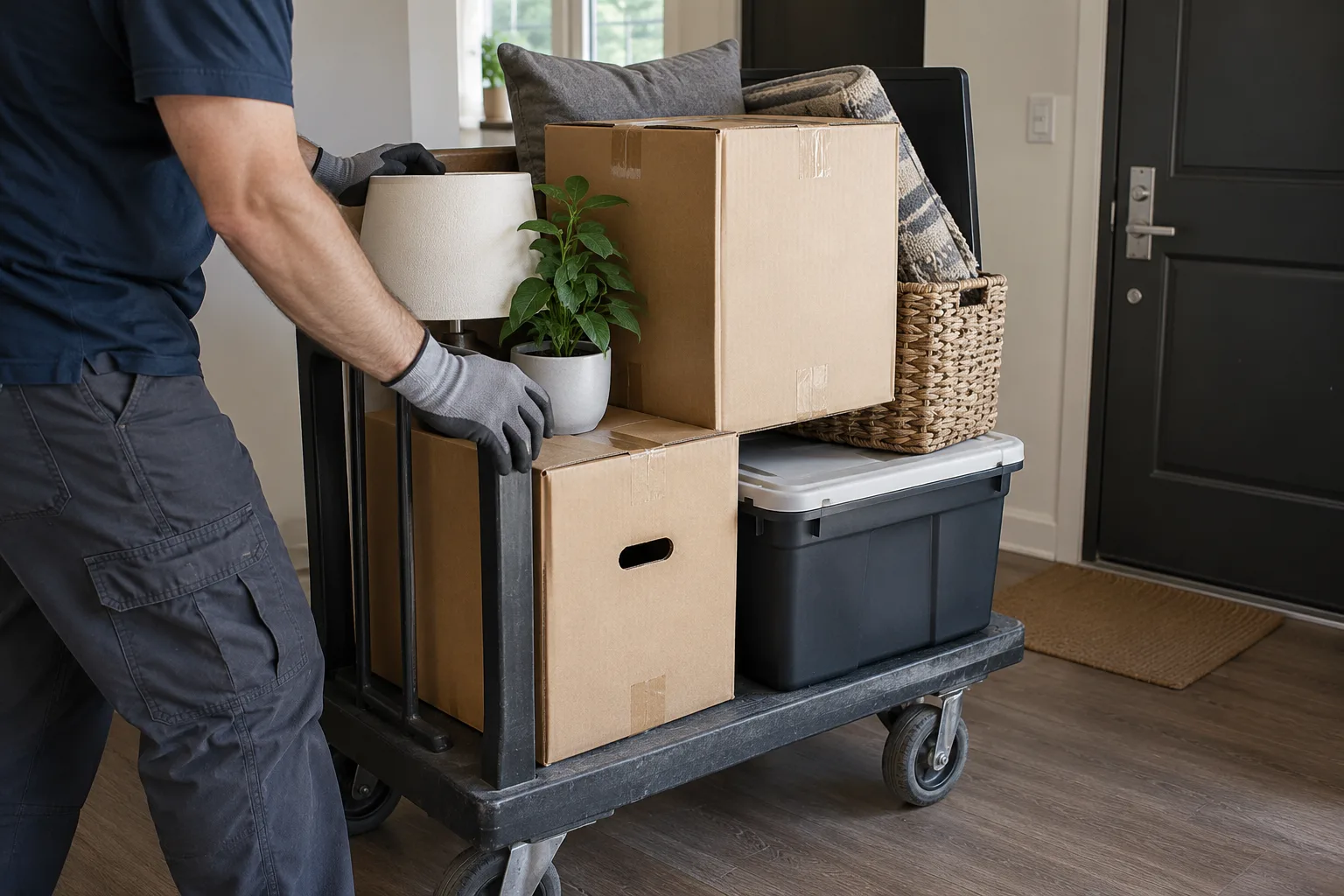
What the scope may include
- Boxes, small furnishings, housewares, and ordinary clutter
- A mixed load of approved household items
- Items staged in rooms or collected from agreed areas
What needs a separate conversation
- Unbagged food waste or biohazards
- Pressurized cylinders, chemicals, or unidentified liquids
- Items outside the approved pickup list
What shapes the estimate
A useful estimate describes the load and the building, not only the number of rooms.
- Number and size of items
- How items are grouped or staged
- Hallway and elevator travel
- Parking distance
- Extra labor for dismantling
Prepare the unit
Mark the items that stay, collect keys or access codes, confirm management rules, and identify the best loading path. If the unit contains anything unusually heavy, damaged, wet, sharp, or potentially infested, mention it before scheduling so the work can be assessed accurately.
Questions to answer before the call ends
Can the crew use the building elevator?
Confirm whether it must be reserved, padded, or used only during certain hours.
Does everything in the unit go?
Use room labels or a written keep list. Do not rely on assumptions when some items remain.
Is parking close to the entrance?
Loading-zone distance and vehicle access affect carrying time and equipment choices.
Read the related preparation guide or review nearby service-area planning pages.